
Introduction
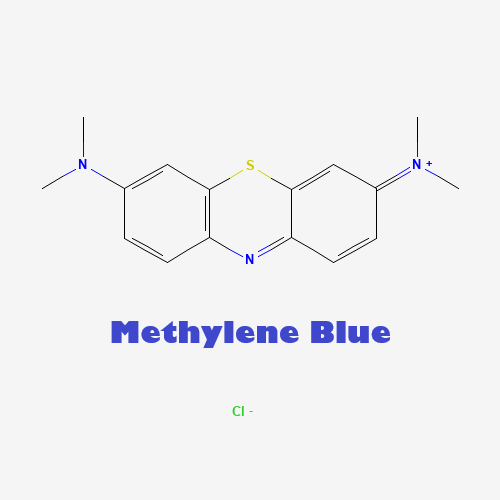
Methylene blue, with the chemical formula C₁₆H₁₈ClN₃S, is a fascinating compound widely recognized for its vivid blue color and diverse applications across scientific, medical, and industrial fields. This article delves into the unique properties, applications, and significance of methylene blue, providing a comprehensive understanding of this essential compound.
Chemical Properties of Methylene Blue
Methylene blue is a synthetic aromatic compound that belongs to the phenothiazine family. Below are its key chemical characteristics:
- Molecular Formula: C₁₆H₁₈ClN₃S
- Molecular Weight: Approximately 319.85 g/mol
- Structure: It features a central phenothiazine core with two methylamino substituents and a chloride counterion. A positively charged nitrogen atom in its structure makes it a cationic dye.
- Appearance: Methylene blue is typically found as a dark green powder or crystalline solid that forms a vibrant blue solution when dissolved in water.
- Solubility: Highly soluble in water and ethanol, allowing it to produce stable solutions.
- Stability: It is stable under standard conditions but sensitive to light, which can lead to degradation over time.
Key Features and Mechanisms
- Redox Behavior: Methylene blue is a reversible redox indicator. It changes color depending on its oxidation state, making it useful in a variety of chemical and biological assays.
- Positive Charge: As a cationic dye, it interacts with negatively charged molecules like DNA and proteins, making it valuable in staining and diagnostic applications.
Applications of Methylene Blue
Methylene blue is celebrated for its versatility and has been applied in a wide range of fields, including:
1. Medical Uses
Methylene blue has been a cornerstone in medicine for over a century. Some of its most notable uses include:
**Methemoglobinemia Treatment: Methylene blue is the primary antidote for methemoglobinemia, a condition where hemoglobin cannot effectively release oxygen to body tissues. Administered intravenously, it rapidly restores normal hemoglobin function.
**Antimicrobial Agent: Its antimicrobial properties make it a valuable tool for treating infections, particularly urinary tract infections and malaria.
**Neurological Health: Recent studies suggest methylene blue can improve cognitive function by enhancing mitochondrial activity and promoting brain energy metabolism. This has led to its exploration as a potential therapeutic agent for neurodegenerative diseases like Alzheimer’s and Parkinson’s.
**Surgical Dye and Stain: It is frequently used as a diagnostic tool, aiding in the visualization of tissue margins during surgery or marking lymph nodes in sentinel node biopsies.
**Emerging Role in Cancer Treatment: In recent years, methylene blue has gained attention for its potential role in cancer treatment. This interest stems from its ability to produce reactive oxygen species (ROS) under certain conditions, a property exploited in photodynamic therapy (PDT).
**Photodynamic Therapy (PDT): Methylene blue acts as a photosensitizer in PDT, a treatment method that combines light exposure with a photosensitizing agent to produce ROS. These ROS selectively target and destroy cancer cells, leaving healthy tissues relatively unharmed. PDT with methylene blue has shown promise in treating skin cancers and is being explored for other cancer types.
**Mitochondrial Targeting: Cancer cells often exhibit dysfunctional mitochondria, making them more susceptible to oxidative damage. Methylene blue’s redox activity and its ability to interact with mitochondrial function may provide a targeted approach to disrupting cancer cell metabolism.
**Research and Clinical Trials: Ongoing research investigates methylene blue’s synergy with other therapies, such as chemotherapy and radiation, enhancing their efficacy. Preclinical studies indicate its potential to suppress tumor growth and sensitize resistant cancer cells to treatment.
2. Scientific Research
In laboratories, methylene blue plays a critical role in various procedures:
- Microscopy: It is commonly used as a staining agent to highlight cellular structures such as nuclei and mitochondria.
- Biochemical Studies: Its redox properties make it an excellent tool for studying electron transport and other oxidative processes.
3. Industrial Applications
Outside of medicine and research, methylene blue is utilized in:
- Textile Dyeing: Its vibrant color makes it a popular choice for fabrics.
- Bacteriological Media: It is used to color and differentiate microorganisms in culture media.
Safety and Dosage Considerations
While methylene blue is generally well-tolerated at therapeutic doses, it is essential to use it under medical supervision. High doses may lead to side effects, such as nausea, dizziness, and serotonin syndrome, particularly when combined with certain medications like SSRIs. For cancer therapies like PDT, precise dosing and treatment protocols are critical to maximizing efficacy and minimizing risks.
Toxicity: At low doses, it is effective and well-tolerated, but high doses can lead to adverse effects such as nausea, vomiting, and in rare cases, serotonin syndrome.
- Handling Precautions: As a highly pigmented dye, it can easily stain skin, clothing, and surfaces. Protective gloves and lab coats are recommended when handling it.
Conclusion
Methylene blue is a remarkable compound with a long history of use in medicine, research, and industry. From treating life-threatening conditions like methemoglobinemia to aiding in cutting-edge neuroprotective research, its versatility is unmatched. Its distinctive chemical properties, such as redox activity and positive charge, further enhance its utility in scientific and industrial applications. Whether as a therapeutic agent, a laboratory tool, or an industrial dye, methylene blue continues to be an invaluable resource in modern science and medicine.
Discover more from Courage Against Cancer
Subscribe to get the latest posts sent to your email.
 Courage Against Cancer