

The Most Complete Guide to Beneficial Mushrooms for Cellular Defense, Recovery & Resilience
Medicinal mushrooms are no longer fringe or folkloric. They are now recognized as biologically active functional foods with profound effects on immune regulation, gut health, inflammation control, and cellular protection.
Used for centuries in Traditional Chinese Medicine (TCM), Japanese Kampo medicine, and indigenous healing systems, medicinal mushrooms are increasingly studied today for their supportive role in cancer prevention, immune recovery, and whole-body resilience.
This pillar guide covers ALL major medicinal mushrooms with known relevance to cancer-supportive health, how they work, and how they fit into a comprehensive, holistic wellness strategy.
⚠️ This content is educational and informational. Medicinal mushrooms support the body’s natural defenses and are not a substitute for professional medical treatment.
Table of Contents:
- Introduction: Why Medicinal Mushrooms Matter for Immune and Cancer-Supportive Health
- What Makes Medicinal Mushrooms Biologically Powerful
- Beta-Glucans (β-1,3 / β-1,6): Immune Recognition & Modulation
- Polysaccharides: Immune Communication & Gut Support
- Triterpenes: Inflammation Control & Detoxification
- Sterols: Cell Membrane & Immune Signaling Support
- Ergothioneine: Cellular & Mitochondrial Protection
- Phenolic Antioxidants: Oxidative Stress Defense
- Medicinal Mushroom Types and Their Cancer-Supportive Benefits
- Reishi Mushroom (Ganoderma lucidum): Immune Balance & Stress Resilience
- Turkey Tail Mushroom (Trametes versicolor): Immune Activation & Gut Health
- Lion’s Mane Mushroom (Hericium erinaceus): Gut–Brain–Immune Axis Support
- Chaga Mushroom (Inonotus obliquus): Antioxidant Defense & Cellular Protection
- Cordyceps (Cordyceps militaris / sinensis): Energy, Oxygen & Recovery Support
- Maitake Mushroom (Grifola frondosa): Immune Metabolism & Blood Sugar Balance
- Shiitake Mushroom (Lentinula edodes): Cardiovascular & Immune Support
- Agaricus blazei: Immune Activation & Cellular Defense
- Phellinus linteus (Mesima Mushroom): Inflammation Control & Immune Regulation
- Poria cocos: Gut Health, Fluid Balance & Immune Calm
- Tremella (Snow Mushroom): Cellular Hydration & Immune Support
- Enoki Mushroom (Flammulina velutipes): Immune Surveillance & Antioxidant Activity
- Schizophyllum commune (Split Gill Mushroom): Polysaccharide-Driven Immune Support
- Ganoderma applanatum (Artist’s Conk): Detoxification & Immune Regulation
- How Medicinal Mushrooms Support the Immune System in Cancer-Focused Wellness
- How to Use Medicinal Mushrooms Effectively
- Medicinal Mushroom Safety, Quality & Sourcing Considerations
- Complete Mushroom Dosing Guideline (Free Protocol Download)
- Frequently Asked Questions About Medicinal Mushrooms
- Are medicinal mushrooms safe during cancer treatment?
- Can multiple mushrooms be taken together?
- How long does it take to see benefits?
- Are mushroom supplements better than food sources?
- Where can I find proper dosing and timing information?
Why Medicinal Mushrooms Matter in Cancer-Supportive Health
Unlike synthetic immune stimulants, medicinal mushrooms are known for immune modulation—the ability to help the immune system respond appropriately rather than excessively.
Core mechanisms include:
- Activation of natural killer (NK) cells
- Support of macrophage and T-cell function
- Regulation of inflammatory cytokines
- Protection against oxidative stress
- Support for gut microbiome diversity
- Assistance with detoxification pathways
What Makes Medicinal Mushrooms Biologically Powerful

The primary bioactive compounds responsible include:
Beta-Glucans (β-1,3 / β-1,6)
What they are:
Beta-glucans are complex polysaccharides found in the cell walls of medicinal mushrooms. The specific β-1,3 and β-1,6 linkages determine their biological activity.
How they work:
Beta-glucans bind to immune receptors such as Dectin-1, CR3, and Toll-like receptors on immune cells (macrophages, NK cells, dendritic cells). This interaction trains the immune system to recognize and respond more effectively to abnormal or damaged cells.
Why they matter for cancer-supportive health:
Enhance immune surveillance
Improve NK cell recognition of abnormal cells
Support immune response without overstimulation
Help the body distinguish between healthy and damaged cells
Bottom line:
Beta-glucans don’t “attack cancer” — they educate the immune system to do its job better.
Polysaccharides
What they are:
Polysaccharides are long-chain carbohydrates made of multiple sugar molecules. In mushrooms, many polysaccharides are biologically active immune modulators.
How they work:
They influence cytokine signaling, immune cell communication, and gut–immune interactions. Many mushroom polysaccharides also act as prebiotics, feeding beneficial gut bacteria.
Why they matter for cancer-supportive health:
Improve immune cell communication
Support gut microbiome (70%+ of immune system resides in the gut)
Help regulate inflammation
Strengthen immune resilience during stress or recovery
Triterpenes
What they are:
Triterpenes are bitter, fat-soluble compounds found especially in Reishi and related Ganoderma species.
How they work:
They influence inflammatory pathways (COX-2, NF-κB), support liver detoxification enzymes, and help regulate immune signaling.
Why they matter for cancer-supportive health:
Help manage chronic inflammation
Support detoxification and liver health
Assist immune balance during prolonged stress
Sterols
What they are:
Sterols are lipid compounds structurally similar to cholesterol, found naturally in mushrooms.
How they work:
They influence cell membrane stability, hormone signaling, and immune cell function.
Why they matter for cancer-supportive health:
Support cell membrane integrity
Help regulate immune signaling pathways
Support hormonal balance indirectly
Ergothioneine
What it is:
Ergothioneine is a rare sulfur-containing antioxidant found in high concentrations in mushrooms.
How it works:
It accumulates in tissues prone to oxidative stress (liver, brain, immune cells) and protects mitochondria and DNA from damage.
Why it matters for cancer-supportive health:
Protects cells from oxidative damage
Supports mitochondrial health
Helps preserve cellular integrity during stress
Phenolic Antioxidants
What they are:
Phenolic compounds are plant- and fungi-based antioxidants that neutralize free radicals.
How they work:
They donate electrons to unstable molecules, preventing oxidative damage to cells, proteins, and DNA.
Why they matter for cancer-supportive health:
Reduce oxidative stress
Protect DNA from damage
Support long-term cellular health
These compounds explain why medicinal mushrooms are widely studied as adjunctive support tools during illness, recovery, and long-term prevention.
Medicinal Mushroom Types and Their Cancer-Supportive Benefits:
Reishi Mushroom (Ganoderma lucidum)

Immune Modulation, Stress Reduction & Inflammation Control
Often referred to as the “Mushroom of Immortality,” Reishi is one of the most respected medicinal mushrooms in cancer-supportive protocols.
Primary benefits:
How it works:
Reishi’s beta-glucans activate immune recognition pathways, while its triterpenes regulate inflammatory signaling and support liver detoxification. This dual action allows Reishi to balance immune response rather than overstimulate it.
Why it matters:
During chronic illness or recovery, the immune system is often either suppressed or overactive. Reishi helps bring the immune system back into functional balance, supporting resilience without immune exhaustion.
Cancer-support relevance:
Reishi’s triterpenes and beta-glucans support immune surveillance while calming excessive inflammatory signaling—making it particularly useful during immune imbalance, chronic stress, or recovery phases.
👉 Shop high-potency dual-extracted Reishi supplements
>>>> Courage Against Cancer’s Healing Store <<<<
Turkey Tail Mushroom (Trametes versicolor)

Immune Activation, Gut Health & Research-Backed Support
Turkey Tail is one of the most studied medicinal mushrooms in oncology research, particularly in Japan.
Key compounds:
- PSK (Polysaccharide-K)
- PSP (Polysaccharide Peptide)
Primary benefits:
How it works:
Turkey Tail’s PSK and PSP polysaccharides stimulate NK cells, T-cells, and macrophages while feeding beneficial gut bacteria. This creates a strong gut-immune feedback loop.
Why it matters:
Gut integrity and immune surveillance are critical in cancer-supportive health. Turkey Tail strengthens both simultaneously.
Cancer-support relevance:
Turkey Tail is widely used to strengthen immune function and gut integrity, both of which are critical during cancer prevention and recovery strategies.
👉 View clinically standardized Turkey Tail extracts Healing Store
Lion’s Mane (Hericium erinaceus)

Gut–Brain–Immune Axis Support
Lion’s Mane is unique among medicinal mushrooms due to its role in nerve regeneration and gut lining repair.
Primary benefits:
How it works:
Lion’s Mane stimulates nerve growth factor (NGF) while supporting gut mucosal repair and reducing inflammatory signaling.
Why it matters:
Damage to nerves, cognition, and gut lining disrupts immune communication. Lion’s Mane helps restore the gut–brain–immune axis, which is essential for recovery.
Cancer-support relevance:
Neuropathy, gut damage, and cognitive fatigue are common during recovery. Lion’s Mane helps restore communication between the gut, brain, and immune system.
Chaga (Inonotus obliquus)

Antioxidant Defense & Cellular Protection
Chaga contains one of the highest antioxidant concentrations found in nature.
Primary benefits:
How it works:
Chaga’s high concentration of melanin, polyphenols, and ergothioneine neutralizes free radicals and protects cellular structures.
Why it matters:
Oxidative stress contributes to cellular dysfunction. Chaga helps shield cells from ongoing damage while supporting immune vigilance.
Cancer-support relevance:
Oxidative stress plays a role in cellular damage. Chaga helps neutralize free radicals while supporting immune defense mechanisms.
Cordyceps (Cordyceps militaris / sinensis)
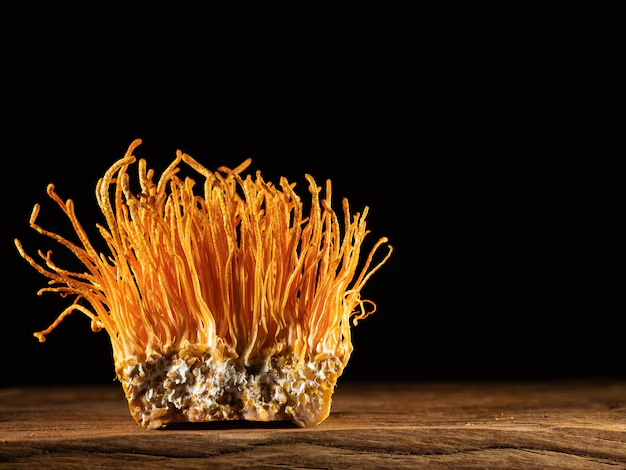
Energy, Oxygen Utilization & Cellular Recovery
Cordyceps supports mitochondrial function and ATP production.
Primary benefits:
How it works:
Cordyceps enhances ATP production and oxygen utilization at the mitochondrial level, improving cellular energy efficiency.
Why it matters:
Recovery requires energy. Cordyceps supports cellular stamina and repair capacity without overstimulation.
Cancer-support relevance:
Fatigue is one of the most common challenges during recovery. Cordyceps supports energy restoration at the cellular level.
Maitake (Grifola frondosa)
Immune Metabolism & Blood Sugar Regulation
Primary benefits:
How it works:
Maitake’s beta-glucans enhance immune signaling while supporting glucose metabolism and insulin sensitivity.
Why it matters:
Metabolic imbalance can impair immune function. Maitake supports immune–metabolic harmony.
Cancer-support relevance:
Metabolic health and immune signaling are closely connected. Maitake supports immune metabolism and systemic balance.
Shiitake (Lentinula edodes)

Cardiovascular & Immune Support
Primary benefits:
How it works:
Shiitake’s lentinan enhances immune responsiveness and supports cardiovascular and gut health.
Why it matters:
Daily immune resilience depends on consistent immune signaling and circulation support.
Cancer-support relevance:
Shiitake is often used as a daily immune-support mushroom in long-term prevention strategies.
Agaricus blazei
Immune Activation & Cellular Defense
Primary benefits:
How it works:
Stimulates immune cell activity and enhances cytokine signaling involved in immune defense.
Why it matters:
Often used when immune activation needs reinforcement during recovery phases.
Phellinus linteus (Mesima Mushroom)
Inflammation Control & Immune Regulation
Primary benefits:
How it works:
Regulates inflammatory pathways and immune cell signaling.
Why it matters:
Supports immune regulation during chronic inflammatory stress.
Poria cocos
Gut, Fluid Balance & Immune Calm
Primary benefits:
How it works:
Supports digestion, fluid balance, and immune calm through gut modulation.
Why it matters:
Immune overload often starts in the gut. Poria helps restore balance.
Tremella (Snow Mushroom)
Hydration, Skin & Immune Support
Primary benefits:
How it works:
Supports cellular hydration, antioxidant defense, and immune moisture balance.
Why it matters:
Healthy cells function better when properly hydrated and protected.
Enoki (Flammulina velutipes)
Immune Surveillance & Cellular Protection
Primary benefits:
How it works:
Contains polysaccharides that support immune surveillance and antioxidant protection.
Why it matters:
Enhances long-term immune defense mechanisms.
Schizophyllum commune (Split Gill Mushroom)
Immune Activation & Polysaccharide Support
Primary benefits:
How it works:
Schizophyllan polysaccharides stimulate immune response pathways.
Why it matters:
Supports immune readiness during stress or recovery.
Ganoderma applanatum (Artist’s Conk)
Immune Regulation & Detox Support
Primary benefits:
How it works:
Similar to Reishi, supports detoxification, immune regulation, and inflammation control.
Why it matters:
Useful for immune balancing and liver support.
How Medicinal Mushrooms Are Best Used
Medicinal mushrooms work best when:
- Properly extracted (hot water + alcohol)
- Used consistently
- Matched to individual needs
- Combined strategically
👉📘 Complete Mushroom Dosing Guideline
Dosage, timing, stacking, cycling & safety for all medicinal mushrooms listed above
Pillar Takeaway
Medicinal mushrooms are foundational tools for immune resilience, gut balance, energy restoration, and cellular protection. When used correctly, they support the body’s natural defenses and recovery mechanisms—making them powerful allies in long-term health, prevention, and healing-focused lifestyles.
Stay Courageous. Healing is possible.
How Medicinal Mushrooms Support the Immune System in Cancer-Focused Wellness

Medicinal mushrooms do not function like drugs or stimulants. Instead, they work by supporting the immune system’s natural intelligence, helping it respond appropriately to stress, abnormal cells, and inflammation.
Their value in cancer-supportive wellness comes from how they influence immune behavior—not from forcing a specific outcome.
Immune Modulation vs Immune Stimulation
One of the most important distinctions in medicinal mushroom science is immune modulation, not immune stimulation.
- Immune stimulation forces the immune system into higher activity, which can lead to exhaustion or excessive inflammation.
- Immune modulation helps the immune system self-regulate—strengthening weak responses while calming overactive ones.
Medicinal mushrooms such as Reishi, Turkey Tail, and Maitake contain beta-glucans and polysaccharides that interact with immune receptors, allowing the immune system to adapt dynamically to the body’s needs.
Why this matters:
In cancer-supportive health, the immune system is often either suppressed or dysregulated. Modulation helps restore functional balance, which is essential for resilience and recovery.
Natural Killer (NK) Cells & Immune Surveillance
Natural Killer (NK) cells are a critical part of the innate immune system. Their role is to identify and respond to abnormal or damaged cells.
Medicinal mushroom beta-glucans bind to immune receptors on NK cells, macrophages, and dendritic cells, enhancing the immune system’s ability to recognize cellular irregularities.
Why this matters:
Healthy immune surveillance helps the body continuously monitor cellular health. Medicinal mushrooms support this process without overstimulation.
The Gut–Immune Connection
More than 70% of the immune system resides in the gut, making digestive health central to immune resilience.
Many mushroom polysaccharides act as prebiotics, feeding beneficial gut bacteria and strengthening the gut lining. Mushrooms such as Turkey Tail, Lion’s Mane, and Poria cocos are particularly known for their gut-supportive effects.
Why this matters:
A healthy gut supports better immune communication, reduced inflammation, and improved nutrient absorption—all essential during recovery and long-term wellness strategies.
Inflammation, Oxidative Stress & Cellular Damage
Chronic inflammation and oxidative stress place constant strain on the immune system and cellular structures.
Medicinal mushrooms help regulate inflammatory signaling pathways while supplying antioxidants such as:
- Ergothioneine
- Polyphenols
- Melanin (especially in Chaga)
Why this matters:
Reducing unnecessary inflammation and oxidative damage allows the immune system to function more efficiently and preserves cellular integrity over time.
How to Use Medicinal Mushrooms Effectively
Medicinal mushrooms are most effective when used consistently, correctly extracted, and matched to individual needs.
Whole Mushroom vs Extracts
- Whole mushrooms provide fiber and general nutrients but limited access to immune-active compounds.
- Extracts concentrate beta-glucans, polysaccharides, and triterpenes, making them far more effective for therapeutic use.
Bottom line:
For immune and cancer-supportive purposes, extracts are preferred.
Dual-Extraction Explained
Some compounds are water-soluble (beta-glucans), while others are fat- or alcohol-soluble (triterpenes).
Dual extraction uses:
- Hot water → extracts polysaccharides and beta-glucans
- Alcohol → extracts triterpenes and sterols
Why this matters:
Dual-extracted mushrooms provide full-spectrum benefits, especially for immune regulation and inflammation control.
Single Mushrooms vs Mushroom Blends
- Single mushroom extracts allow targeted support (e.g., Reishi for immune balance).
- Blends provide synergistic benefits across immune, gut, and energy systems.
Best practice:
Many people start with single mushrooms, then transition to blends as part of a long-term protocol.
Consistency, Cycling & Long-Term Use
Medicinal mushrooms are not fast-acting stimulants. Benefits typically build over weeks.
- Daily consistency matters more than high doses
- Some mushrooms are used continuously (Turkey Tail, Reishi)
- Others may be cycled depending on goals (Cordyceps for energy)
👉 Detailed guidance is provided in the Complete Mushroom Dosing Guideline through our Resources page .
Medicinal Mushroom Safety, Quality & Sourcing Considerations
Quality and sourcing dramatically affect the effectiveness of medicinal mushrooms.
Organic vs Wild-Harvested
- Organic cultivation ensures consistency and contaminant control
- Wild-harvested mushrooms may contain higher antioxidant levels but require careful sourcing
Best choice:
Reputable brands that disclose origin, cultivation method, and testing.
Third-Party Testing & Standardization
High-quality medicinal mushroom supplements should:
- Be tested for heavy metals, mold, and contaminants
- Disclose beta-glucan content (not just “polysaccharides”)
- Use fruiting bodies rather than mycelium grown on grain
Why this matters:
Many low-quality products contain fillers with minimal active compounds.
Interactions & Precautions
Medicinal mushrooms are generally well tolerated but should be used thoughtfully.
- Those undergoing medical treatment should consult a qualified professional
- Start with lower doses to assess tolerance
- Monitor for digestive sensitivity or immune reactions
Why this matters:
Supportive tools work best when integrated responsibly into a broader wellness plan.
Complete Mushroom Dosing Guideline (Free Protocol Download)

Important Safety Note
Medicinal mushroom dosing is not standardized, and human data in cancer is still emerging. Always clear any protocol with an oncology or integrative clinician, especially with chemotherapy, immunotherapy, or anticoagulants.
Daily Dosage Ranges (Extracts)
Use these as general educational ranges for standardized extracts (capsules, powders, tinctures); always follow your product label.
- Reishi (Ganoderma lucidum)
- General wellness: 1,000–3,000 mg/day of extract, commonly divided doses.
- Clinical ranges: traditional and trial doses span 1.5–9 g/day dried extract with good safety.
- For a gentle foundational mushroom, choose a high-beta-glucan Reishi extract and titrate from 1,000 mg/day Healing Store.
- Turkey Tail (Trametes versicolor)
- Typical supplement: 1,000–3,000 mg/day.
- Cancer trials (PSK/PSP): about 3 g/day, with safety data up to 9 g/day in breast cancer for 6 weeks.
- Look for products that specify PSK/PSP content and third-party testing before increasing to higher supportive ranges Healing Store.
- Lion’s Mane (Hericium erinaceus)
- Cognitive/gut support: 1,000–3,000 mg/day.
- Human trials: 1–3 g/day erinacine-enriched or fruiting body extract over weeks has shown cognitive and mood benefits with good tolerance.
- Add Lion’s Mane to a morning stack for focus and resilience; choose a fruiting-body based product Healing Store.
- Chaga (Inonotus obliquus)
- Cordyceps (Cordyceps sinensis / militaris)
- Shiitake (Lentinula edodes, lentinan)
- Agaricus blazei
Download the free ‘Complete Mushroom Dosing Protocol’ PDF to see these ranges in a printable chart, plus space to track your own regimen and lab markers.”
Timing: Morning vs Evening
Different mushrooms pair better with different times of day.
- Best in the morning (energy, focus, performance)
- Lion’s Mane: Supports cognition, attention, and mood; human trials showing cognitive and reaction-time changes used daily dosing during the day.
- Cordyceps: Traditional use and modern data link it to ATP production, stamina, and oxygen utilization, so morning or pre-activity works best.
- Chaga: Often used in coffee/tea as an antioxidant, so fits well in morning beverages.
- Best in the evening (calming, restoration)
In the downloadable protocol, you’ll find sample ‘AM Focus Stack’ and ‘PM Restore Stack’ layouts you can customize with your clinician. RESOURCES
Stacking Strategies
Think in terms of goals: immune modulation, resilience during treatment, recovery, or long-term prevention.
- Foundational Immune Stack (daily baseline)
- Brain + Gut Resilience Stack
- Energy + Treatment Tolerance Stack
Prefer not to build your own stack? Explore curated immune, cognitive, and energy mushroom blends from our trusted affiliate partners in our Healing Store, all designed to stay within the dosing ranges in this guide.
Beginner to Advanced Use
Think of progression in three stages, guided by tolerance, lab data, and clinical input.
Beginner (Weeks 1–4)
- Start with one mushroom at the low end of the range (e.g., Reishi 500–1,000 mg/day or Lion’s Mane 500–1,000 mg/day).
- Take with food, track digestion, sleep, energy, and any rash or allergy-like symptoms.
- If tolerated after 7–10 days, either:
- Increase dose modestly, or
- Add a second mushroom from another category (e.g., Lion’s Mane for brain + Reishi for immune).
Use the free protocol download to log Week 1–4 dosing, symptoms, and questions for your care team.
Intermediate (Months 2–6)
- Build a 2–3 mushroom stack around your primary goal (immune, cognitive, energy) using mid-range doses (often 1–2 g each).
- Consider pulse strategies (e.g., 5 days on, 2 off) if using higher ranges, and re-check labs such as liver function and blood counts as guided by your clinician.
- For those in active cancer care, any move toward high-end PSK/PSP or multi-gram stacking should be coordinated with oncology due to limited but evolving data.
Advanced (Oncologist-Supervised)
- Includes higher adjuvant doses of Turkey Tail (up to 3–9 g/day), complex stacks combining 3–5 species, or integration with immunotherapy or targeted agents.
- Requires close monitoring for interactions, GI tolerance, and immunologic markers.
Ready to formalize your regimen? Download the ‘Complete Mushroom Dosing Protocol’ as a free PDF through our Resources page, then review it line-by-line with your oncologist or integrative practitioner before implementing. For those cleared to proceed, shop vetted, research-aligned mushroom extracts through our affiliate partners to match the doses referenced in this guide.”
Frequently Asked Questions About Medicinal Mushrooms

Are medicinal mushrooms safe during cancer treatment?
Medicinal mushrooms are widely used as supportive wellness tools, particularly for immune balance, gut health, and recovery support. However, individuals undergoing active cancer treatment should consult a qualified healthcare professional before adding any supplement. Medicinal mushrooms are not intended to replace medical care but may be used responsibly as part of a broader, integrative wellness approach.
Do medicinal mushrooms kill cancer cells?
Medicinal mushrooms do not directly kill cancer cells. Instead, they support the body by:
- Enhancing immune surveillance
- Supporting inflammation balance
- Reducing oxidative stress
- Improving gut–immune communication
Their primary role is to support the body’s natural defense and recovery mechanisms, not to act as drugs.
What are beta-glucans, and why are they important?
Beta-glucans are immune-active polysaccharides found in medicinal mushrooms. They interact with immune receptors on natural killer (NK) cells, macrophages, and dendritic cells, helping the immune system recognize and respond to abnormal cells more effectively. Beta-glucans are one of the main reasons medicinal mushrooms are studied for immune resilience.
Can I take multiple medicinal mushrooms together?
Yes. Many medicinal mushrooms work synergistically and are often combined in protocols or blends. For example:
- Reishi + Turkey Tail for immune balance and activation
- Lion’s Mane + Chaga for brain and cellular support
- Cordyceps + Maitake for energy and immune metabolism
Proper dosing and timing are important, which is why a structured guideline is recommended.
How long does it take to notice benefits from medicinal mushrooms?
Medicinal mushrooms are not fast-acting. Most people notice benefits gradually over 2–6 weeks of consistent use. Immune modulation, gut support, and cellular protection are cumulative processes that improve with regular intake over time.
Are mushroom supplements better than eating mushrooms as food?
Culinary mushrooms are nutritious, but medicinal mushroom supplements provide concentrated extracts of bioactive compounds such as beta-glucans and triterpenes. For immune and cancer-supportive wellness, dual-extracted supplements are generally more effective than food sources alone.
What is dual extraction, and why does it matter?
Dual extraction uses both hot water and alcohol to extract different compounds:
- Hot water extracts beta-glucans and polysaccharides
- Alcohol extracts triterpenes and sterols
This ensures a full-spectrum extract, which is especially important for immune regulation and inflammation balance.
Are medicinal mushrooms safe for long-term use?
Most medicinal mushrooms are considered safe for long-term use when sourced from high-quality, tested supplements and used at appropriate doses. Some mushrooms are used continuously, while others may be cycled depending on individual goals. Starting with lower doses and monitoring response is recommended.
Do medicinal mushrooms interact with medications?
Medicinal mushrooms may influence immune activity or metabolism and could theoretically interact with certain medications. Anyone taking prescription drugs or undergoing medical treatment should consult a healthcare professional before use.
What is the best medicinal mushroom for immune support?
There is no single “best” mushroom. Different mushrooms serve different roles:
- Reishi for immune balance
- Turkey Tail for immune activation and gut health
- Maitake for immune–metabolic support
- Chaga for antioxidant protection
A personalized or stacked approach is often most effective.
Where can I find proper dosing and timing information?
Detailed dosing, timing, stacking strategies, and safety guidance are provided in the Complete Mushroom Dosing Guideline through our Resources, which covers all medicinal mushrooms discussed in this article.
👉 Free Download: Complete Mushroom Dosing Guideline
Donate
We work tirelessly to do the research, curate the articles, produce FREE resources, and submit research proposals for clinical trials to push forward our Mission and Vision of what cancer care should be for every patient. We can’t do it without your support. Your $5 donation fuels this effort and keeps me typing out these articles!
Don’t be shy …. show the Love!
Make a one-time donation
Make a monthly donation
Make a yearly donation
Choose an amount
Or enter a custom amount
Your contribution is appreciated.
Your contribution is appreciated.
Your contribution is appreciated.
2 replies on “Medicinal Mushrooms for Immune Health & Cancer Support”
[…] rather than ad hoc publishing. Content covering complex topics like the relationship between medicinal mushrooms and immune health in cancer support benefits from systematic framework rather than one-off article […]
[…] Download?: Discover smoothie recipes and sourcing tips at Resources, article Medicinal Mushrooms, purchase mushroom extract via Real Mushrooms through our Healing […]